Understanding Gum Recession: Causes and Treatment Options
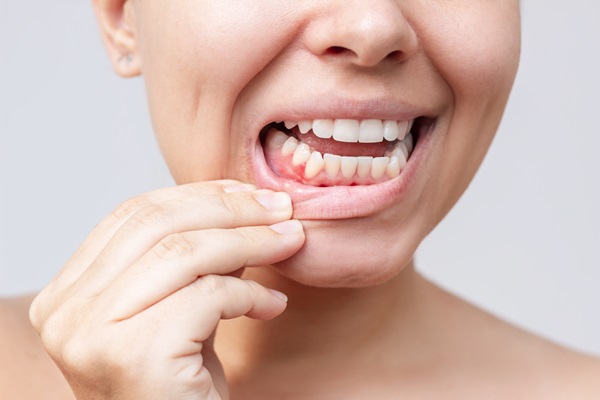
Gum recession, a direct result of gum disease, is a condition that can be effectively prevented, treated, or managed with the expert guidance of a periodontist. Their specialized knowledge and various treatment options can help you restore your smile or prevent extensive issues from occurring. Having a baseline of information regarding the condition, its causes, and treatment options can do wonders for improving your oral care as well as preparing you for an upcoming appointment.
A deep dive into gum recession and treatment options
What is gum recession?
Gum recession refers to the soft tissue lining of the mouth pulling away from the teeth. This condition destabilizes the natural teeth and makes applying some tooth replacement options, such as dental implants, more difficult for a periodontist. It also exposes tooth roots, causing sensitivity and pain before eventually leading to tooth loss and jawbone deterioration due to the infection progressing from one structure to the next.
Causes of gum recession
Gum recession is primarily a result of gum disease or periodontal disease. Gum disease is a serious infection that results from constant plaque and tartar build-up. Plaque is a sticky, bacteria-filled film that populates throughout the day and night. It is easily removable with proper oral hygiene techniques, such as brushing twice daily, flossing once daily, cleansing the tongue, and using an antibacterial mouth rinse.
When one does not consistently employ these practices, plaque turns into tartar, a calcified version. Patients cannot remove tartar; only a dental professional using various tools can. Tartar can spread below the gumline, infecting the tissue with bacteria.
Gum disease occurs in two stages: gingivitis and periodontitis. Gingivitis is reversible, as it is the earliest stage of this disease. It manifests in the gums as bleeding when brushing or flossing, inflammation, sores, tenderness, and shiny or discolored. It also causes chronic bad breath. On the other hand, periodontitis manifests as the previously mentioned symptoms, plus pus forming at the gum line, loose teeth, pain when chewing or brushing, spaces that look like black triangles, a change in how the teeth fit together, and gum recession. While this stage is not reversible, it is manageable.
Though gum disease is the most common cause, it is not the only cause of gum recession. According to the Cleveland Clinic, tobacco consumption, aggressive teeth brushing, oral piercing, certain medications, and some orthodontic appliances can also cause this condition. Regardless of the reason, seeking a periodontist as soon as symptoms manifest is crucial to preventing extensive damage.
Diagnosing gum recession
If the severity is progressive enough, patients can see gum recession themselves. However, the periodontist will perform a simple test for a formal diagnosis, especially for those in the beginning stages. This painless test involves using a periodontal probe, a small instrument that measures the amount of gum tissue around each tooth. They will also use the instrument to measure the amount of underlying bone in the periodontal pockets surrounding each tooth. Healthy measurements read to one to three millimeters. Numbers higher than these indicate gum recession and disease.
Treatment options for gum recession
It is important to note that gum tissue cannot regenerate; it requires treatment. A periodontist customizes treatment plans based on the severity of gum recession and its cause. They may consider one or a combination of the following treatments: antibiotics and gum grafts. Antibiotics are a straightforward solution to eliminate gingivitis. The periodontist will typically prescribe antibiotics in pill form or a rinse solution after deep cleaning to remove tartar.
Gum grafts are surgical procedures that involve filling the receding area with healthy tissue. There are three primary types:
- Connective tissue gum grafts. Commonly used for tooth root exposure, the periodontist extracts tissue from a flap of skin on the roof of the mouth and stitches it to the remaining gum tissue surrounding the tooth root.
- Free gingival gum grafts. Like the connective tissue graft, the periodontist will extract healthy tissue from the roof of the mouth without creating a flap and attach it to the receding area, regardless of how much of the tooth is exposed.
- Pedicle gum grafts. Instead of taking tissue from the roof of the mouth, the periodontist will extract healthy tissue from the areas surrounding (usually these areas have excess amounts) the receding portion and stitch it into place.
Stop gum recession in its tracks
Most causes of gum recession are avoidable. However, no matter what stage you have found yourself in, we can help. Contact our Cypress office and schedule a consultation to determine the most effective solution for your needs.
Request an appointment here: https://www.charlesdyeriv.com/ or call Charles E. Dyer IV, DDS, MS, PC at (281) 213-0900 for an appointment in our Cypress office
Check out what others are saying about our dental services on Google: Gum Recession in Cypress, TX.
Related Posts
Receding gums occur as a result of periodontitis (gum disease). Early intervention for gum disease can minimize the invasiveness of treatment, and many patients are able to restore the health of their gums and teeth through improvements in their oral care routine, non-invasive dental treatments, and at-home remedies.At-home remedies do not reverse receding gums, but…
Receding gums can be a symptom of gingivitis, the first stage of gum disease. It can also be caused by other factors, like a genetic predisposition to developing gum recession or bad brushing techniques.Gingivitis occurs when plaque and tartar make their way below gum tissues. The bacteria inside them infect gum tissues, leading to an…
Receding gums are often blamed on brushing techniques. Surprisingly, most individuals with receding gums are unaware that they have a dental problem that must be addressed. On the other hand, others have been aware because the roots of their teeth have become exposed or they have had dental sensitivity.Gum recession occurs when the gum tissue…
Receding gums are the result of a severe case of gum disease (known as periodontitis) that is left untreated. If you have receding gums, then there is an increased risk of experienced sensitive teeth as well as other discomforting symptoms.If left untreated, receding gums can lead to the loosening and ultimately the loss of teeth…